 Github Stars:
 Last Commit:
  Created:

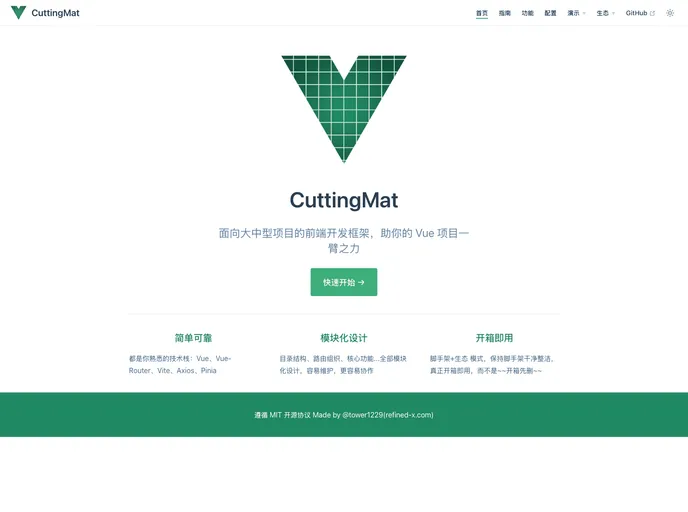
Overview
The template-element-uilicense is a PC desktop project scaffolding built on top of Element-UI. It provides a modular directory structure, built-in caching and encryption for requests, built-in permission management solution, Pinia state management, common components, basic CSS, and utility methods.
Features
- Modular directory structure: The template follows a modular directory structure to ensure better organization and maintainability of the project.
- Built-in caching for requests: The template includes a caching solution for requests, which helps improve performance by reducing unnecessary network requests.
- Built-in encryption for requests: The template also provides an encryption solution for requests, enhancing security by encrypting sensitive data during transmission.
- Built-in permission management: The template comes with a built-in solution for managing permissions, allowing easy control and management of user permissions in the project.
- Pinia state management: Pinia is used for state management in the template, providing a scalable and efficient way to manage application state.
- Common components: The template includes commonly used components, reducing the need for developers to build them from scratch and speeding up development.
- Basic CSS: The template includes a set of basic CSS styles, providing a starting point for styling the project.
- Utility methods: The template provides a collection of useful utility methods, simplifying common programming tasks and improving productivity.
Installation
To install the template-element-uilicense, you can follow these steps:
- Clone the repository:
git clone <repository_url>
- Navigate to the project directory:
cd template-element-uilicense
- Install the dependencies:
npm install
- Start the development server:
npm run serve
- Access the application in your browser at the specified URL.
Summary
The template-element-uilicense is a convenient and feature-rich PC desktop project scaffolding built on top of Element-UI. It provides a modular directory structure, built-in caching and encryption for requests, built-in permission management, Pinia state management, common components, basic CSS, and utility methods. By using this template, developers can kickstart their projects quickly and efficiently, saving time and effort in the development process.