 Github Stars:
 Last Commit:
  Created:

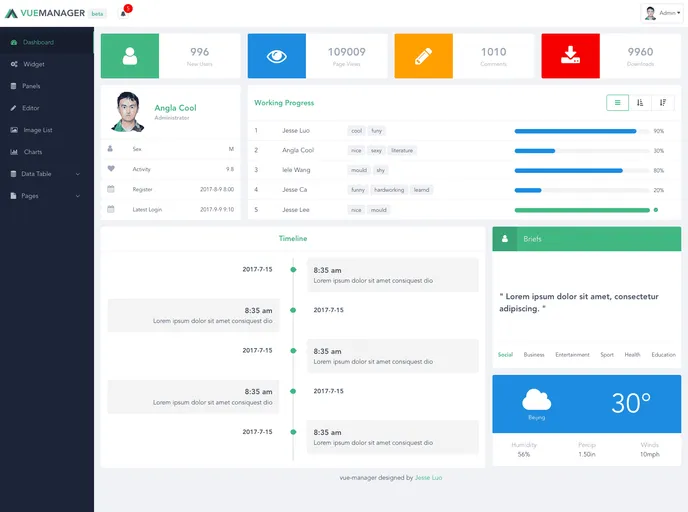
Overview
If you’re looking to manage your Vue applications more efficiently, the Vue Manager is an exciting option to consider. This open-source project provides a structured way to handle your Vue components with an array of tools that ease development and customization. Built on Vue 2.0 and featuring user-friendly components, it has quickly become a favorite among developers aiming to enhance their workflow while maintaining flexibility.
What makes this project stand out is not just its functional essence but also its ability to modify styles and data structures seamlessly. By leveraging this framework, you can enhance the visual aspects of your applications while enjoying a robust feature set that caters to diverse needs.
Features
Easy Installation: Set up the Vue Manager effortlessly using
git cloneand straightforward npm commands, making it suitable for developers of all skill levels.Customizable Global Styles: Modify the global styles by simply changing the LESS files, giving you complete control over the aesthetics of your applications.
Comprehensive Component List: Access a well-structured directory of components including
vm-progress,vm-timeline,vm-chart-bar-line, andvm-table, simplifying the development process.Data Binding: Use structured data arrays for components, allowing dynamic content display and easy manipulation of data sets.
Editable Tables: The
vm-tablecomponent supports both editable and non-editable configurations, enabling detailed user interaction management.Charting Capabilities: Create visually appealing charts with
vm-chart-bar-line, which includes customization options such as height and color themes.Event Management: Handle various user-triggered events like
edit-ok,add-ok, anddelete-okto maintain control over the application’s data flow.User-Friendly API: Each component comes with clear attribute descriptions and default settings, making it easy to understand and implement with minimal effort.